
FACT SHEET
Title:PlugINK
Location:Donostia, Pais Vasco
Year:2017-2026
Program:mixed-use
Status:built
Team:Josean Ruiz Esquiroz
TEXT
In the Altza neighbourhood of San Sebastián, far from its famous beaches, thousands of homes were built in the late 1970s, leading to extreme densification in an area with challenging topography. Although it is now well connected to the city centre, private cars remain an essential means of transport for its residents, and parking spaces are a pressing necessity.
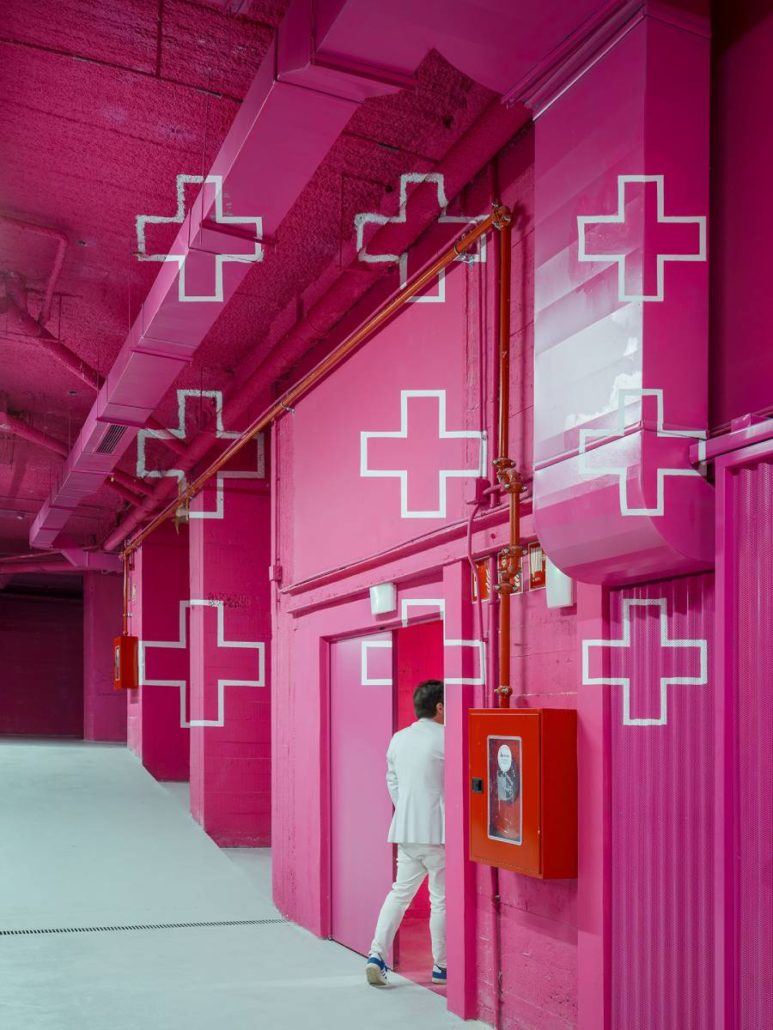
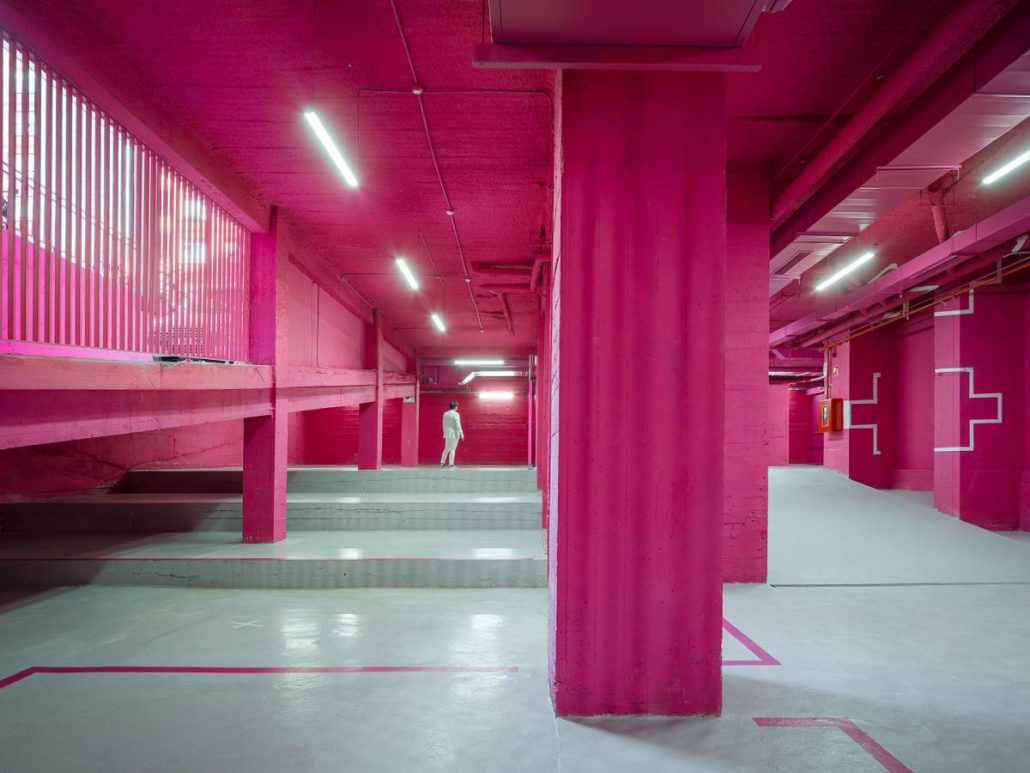
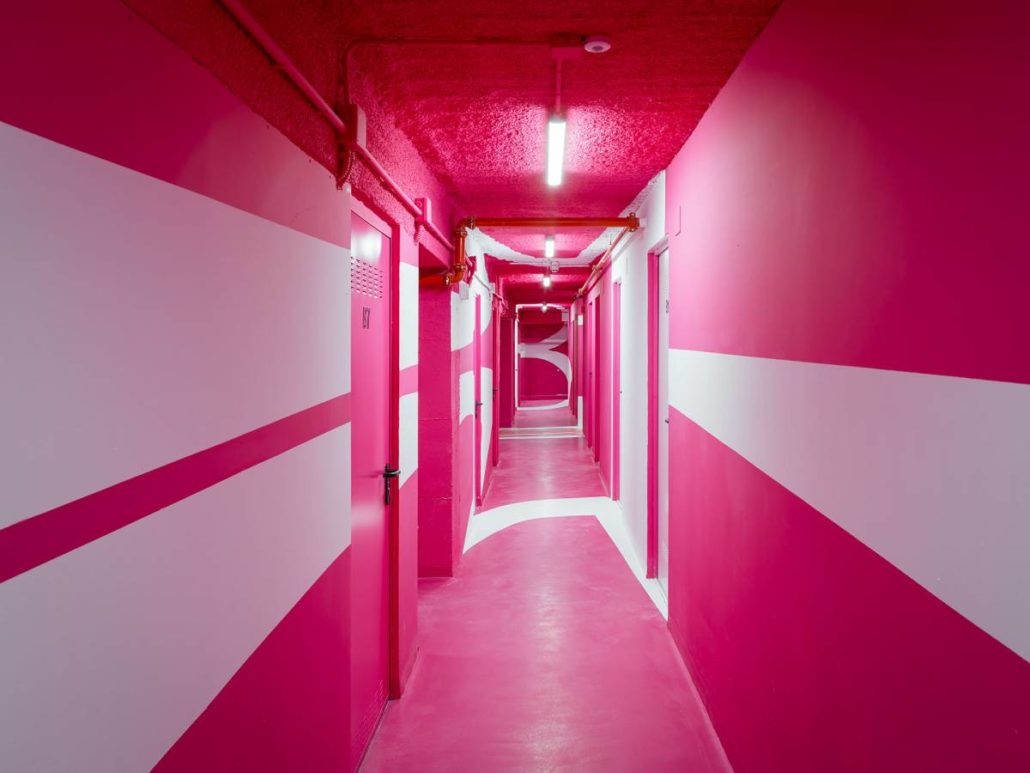
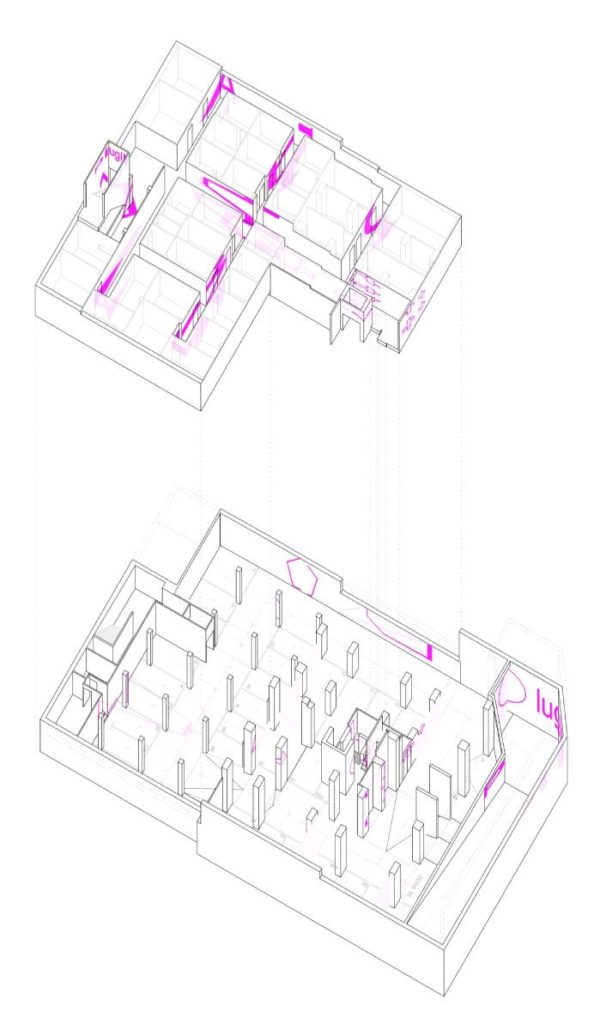
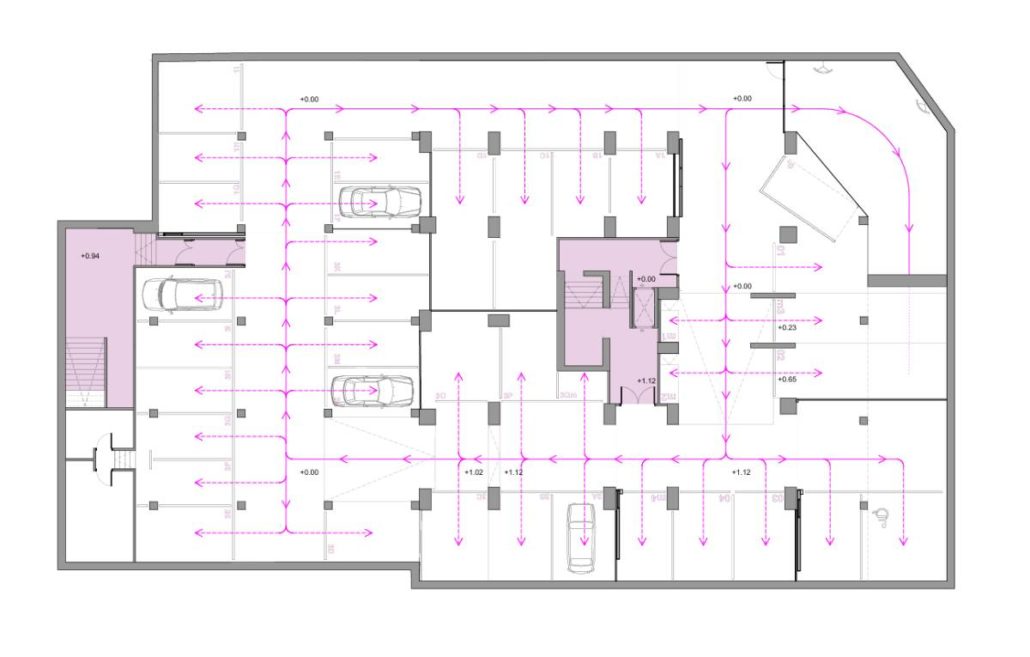
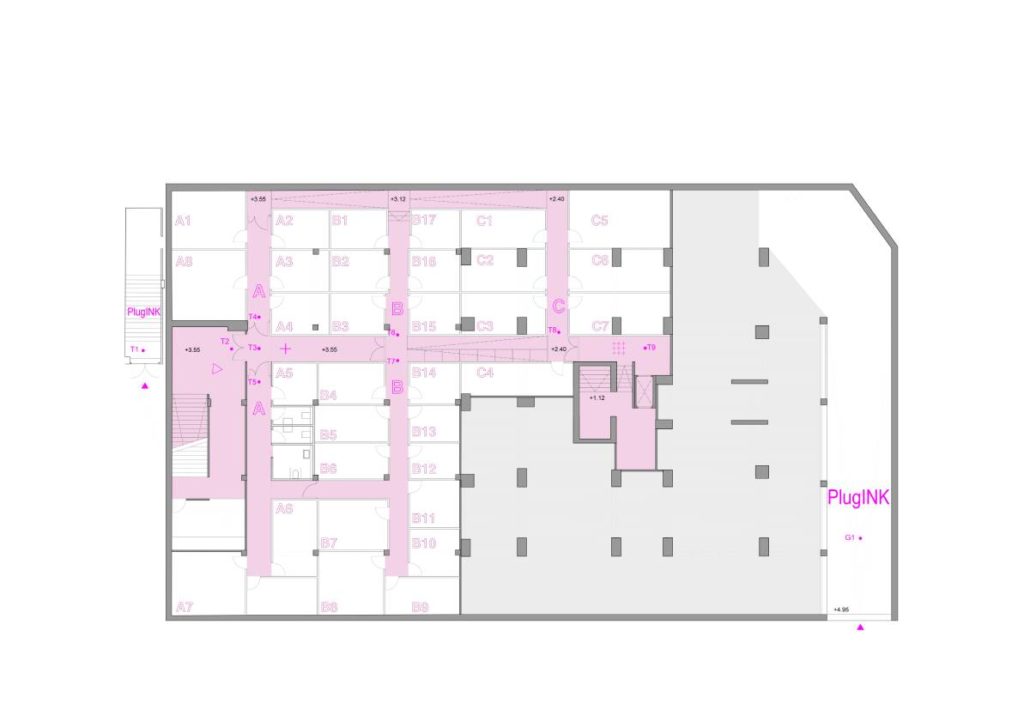
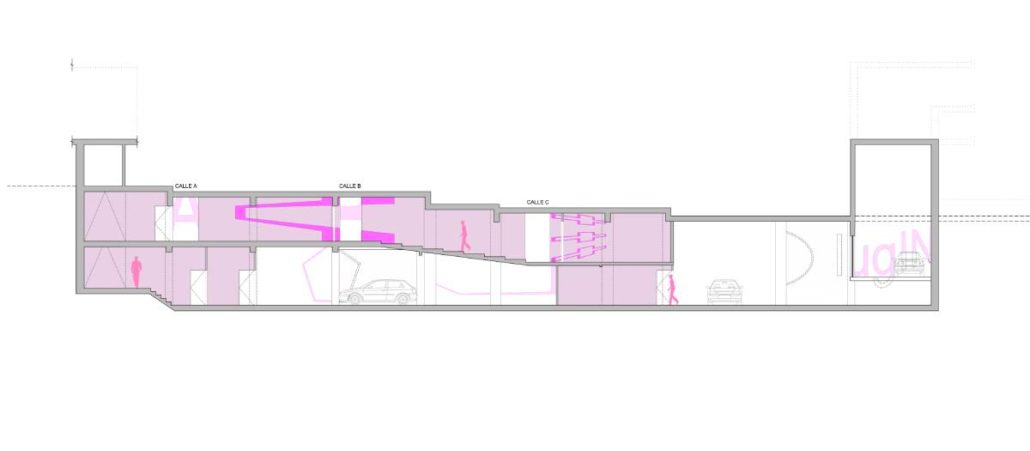
The PlugINK project transforms an old 2,000 m² underground space into a car park and storage units, with the aim of alleviating the neighbourhood’s serious parking problem.
The starting point could hardly have been less glamorous: a basement with no natural light or ventilation, 100 per cent humidity, structural defects and a diverse population of rodents and spiders. Le Corbusier’s definition of architecture as a wise, correct and magnificent interplay of volumes brought together under light was not applicable here. The proposal involved adapting the space to current regulations, employing an optimistic design that would erase four decades of darkness once and for all.
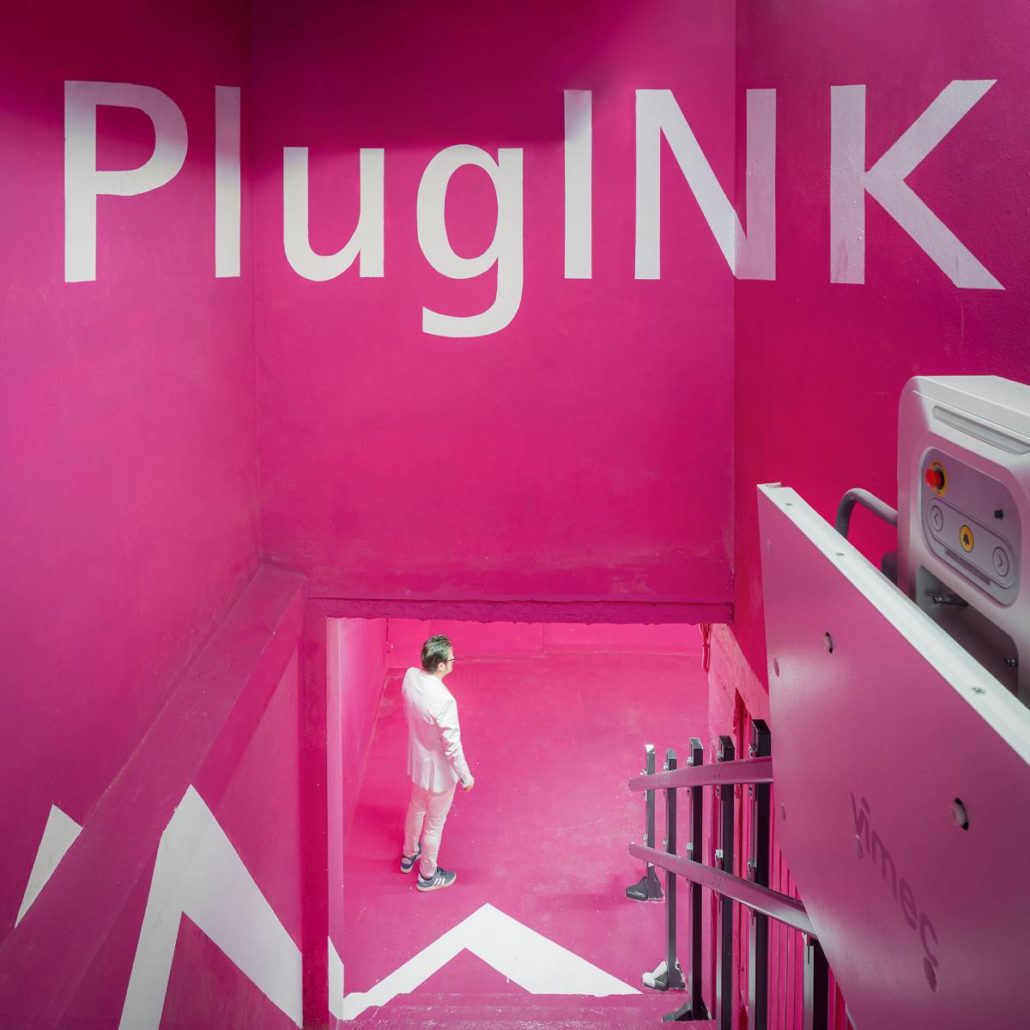
The name PlugINK combines the two key features of the proposal: ‘Plug’ for the electrical plug and ‘PINK’ for the colour pink.
The first episode of *The Pink Panther* (1969) makes it clear that pink is more than just a colour; it is a manifesto against the little white man who paints everything blue. The ‘becoming pink’ of the world (Deleuze and Guattari) becomes a challenge to individualism and patriarchy. In Donostia, blue represents the status quo of the txuri-urdin tradition—the colour of Real Sociedad’s shirt and the city’s flag. Pink is therefore a singularity.
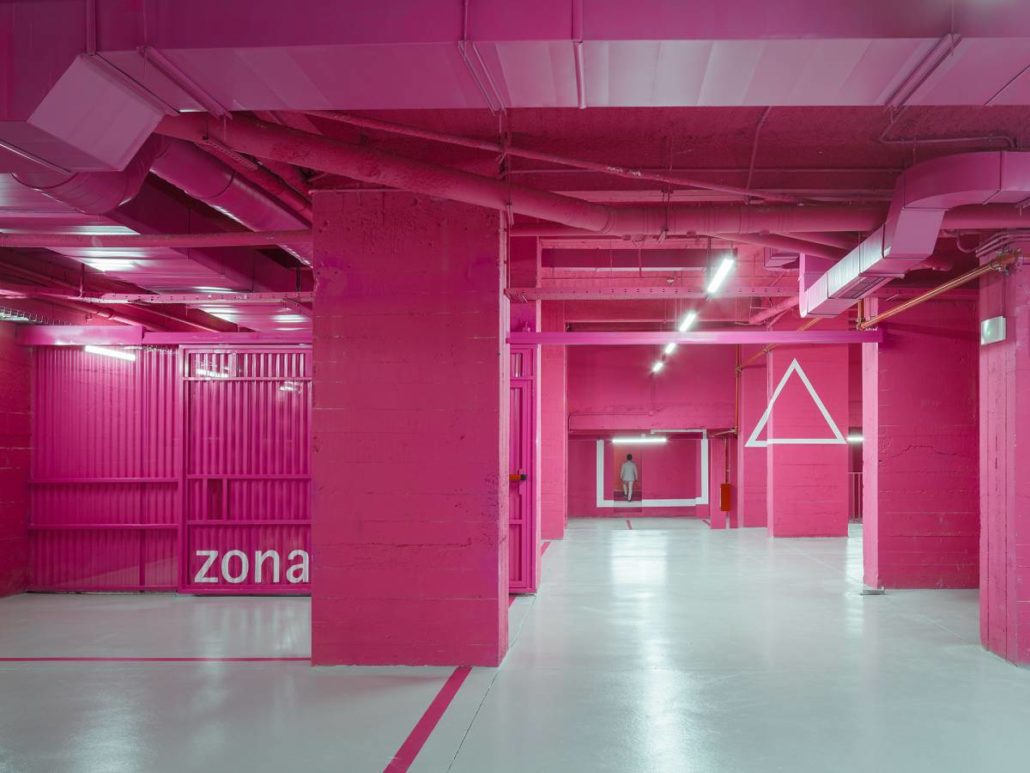
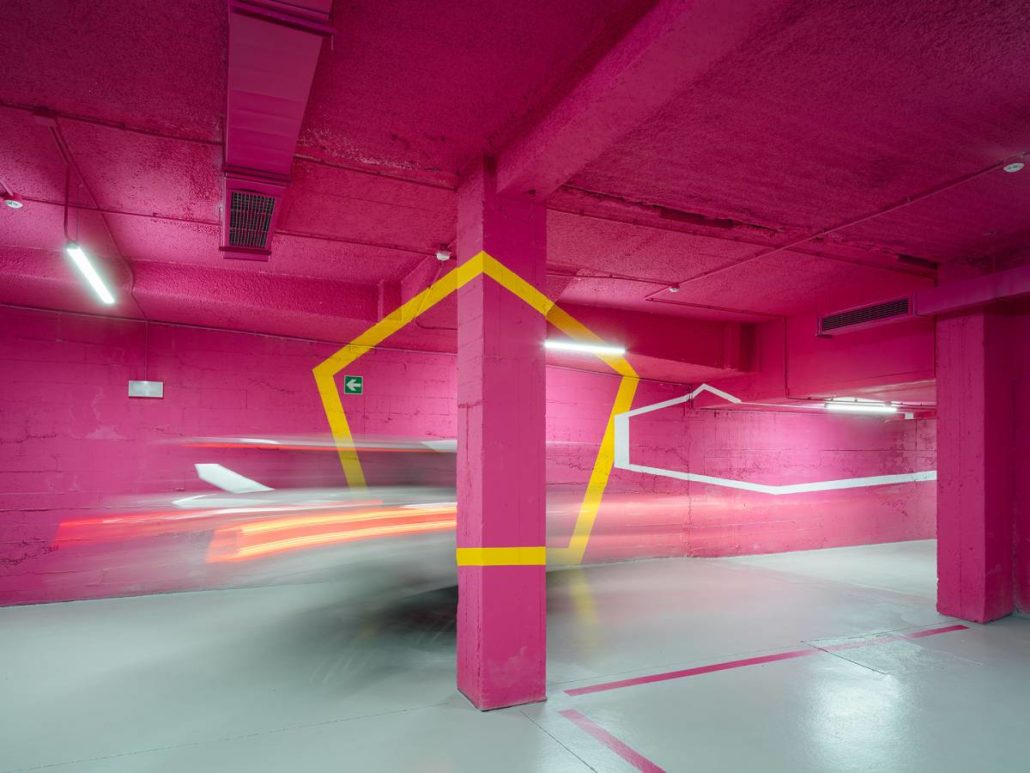
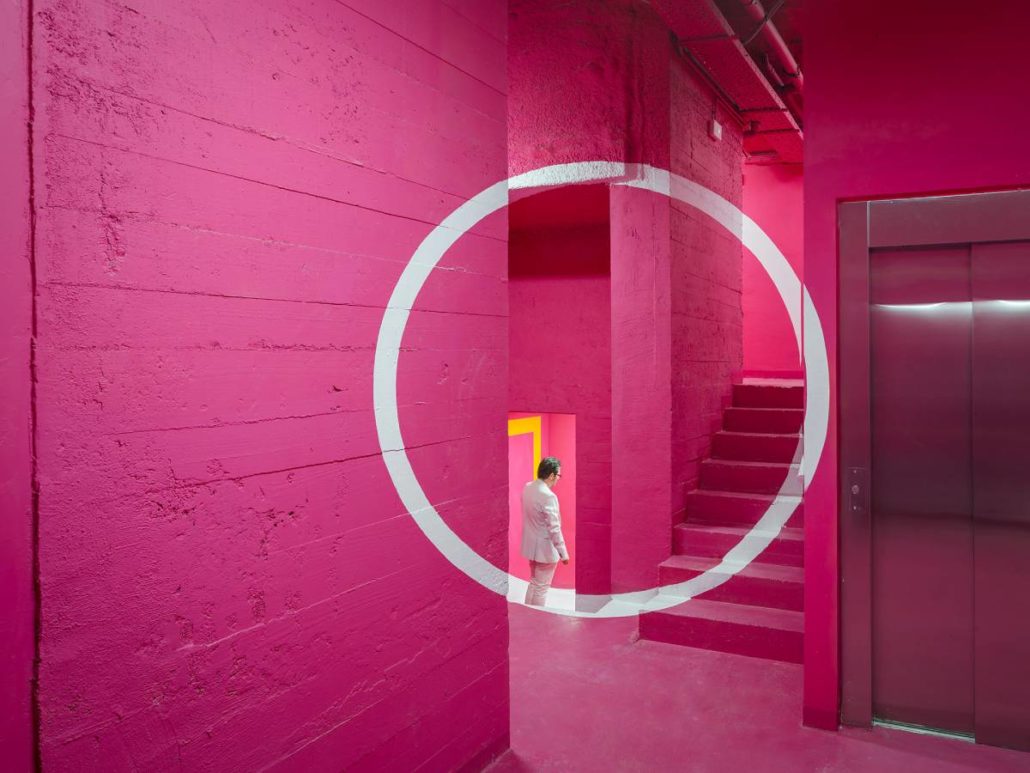
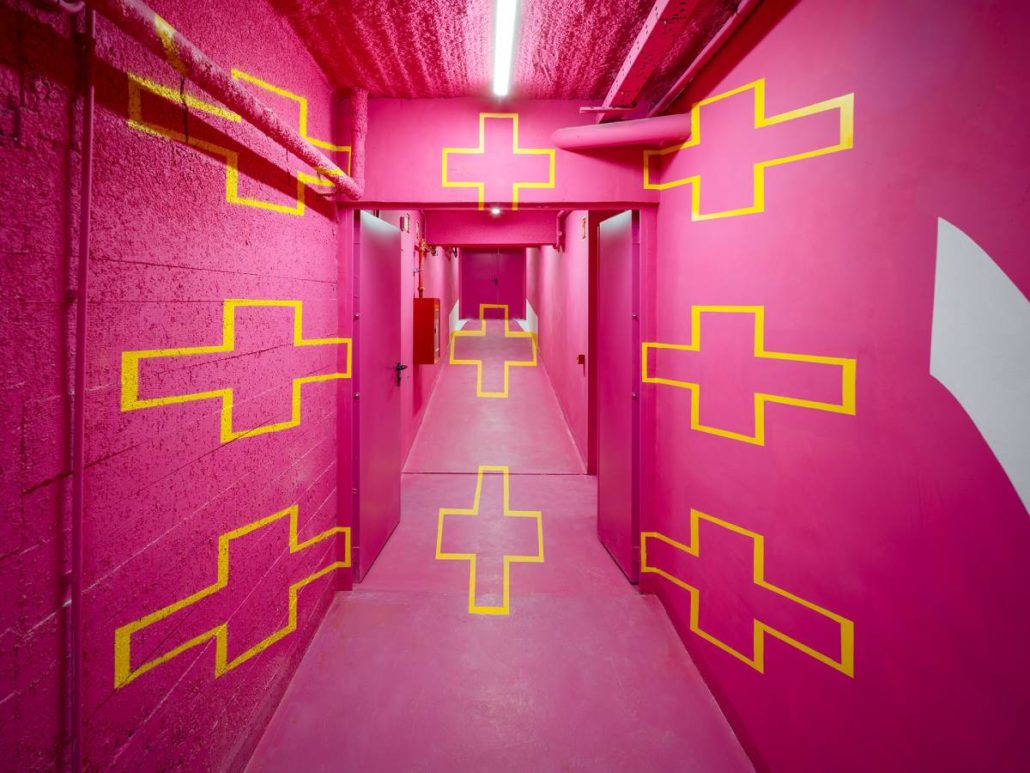
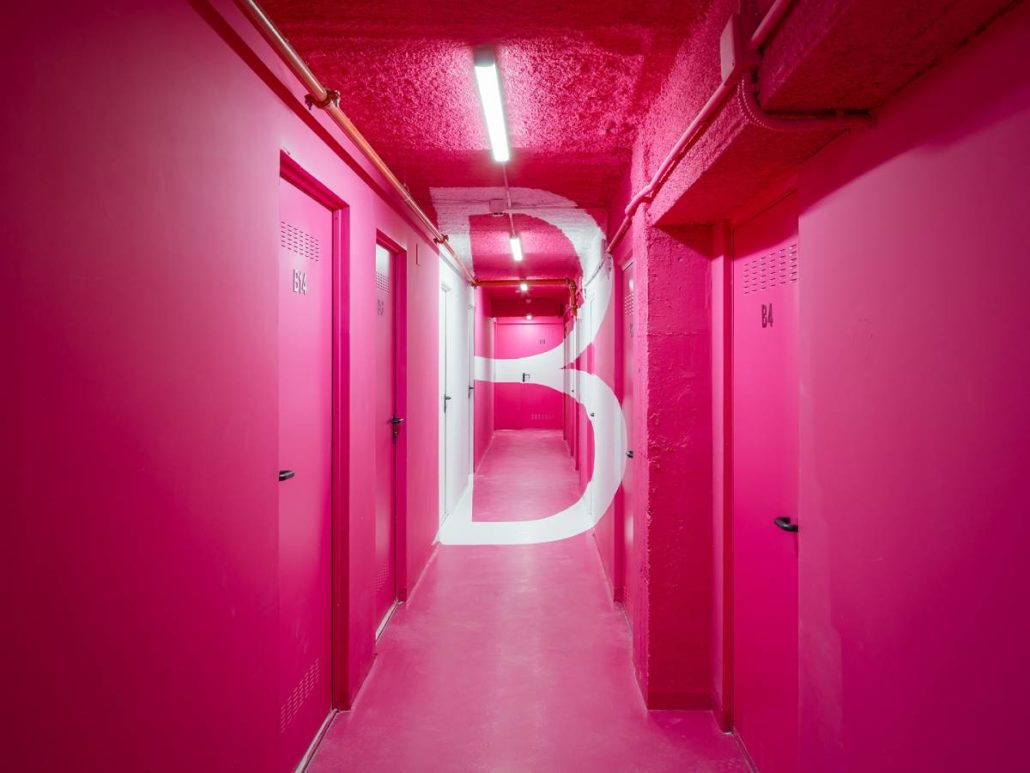
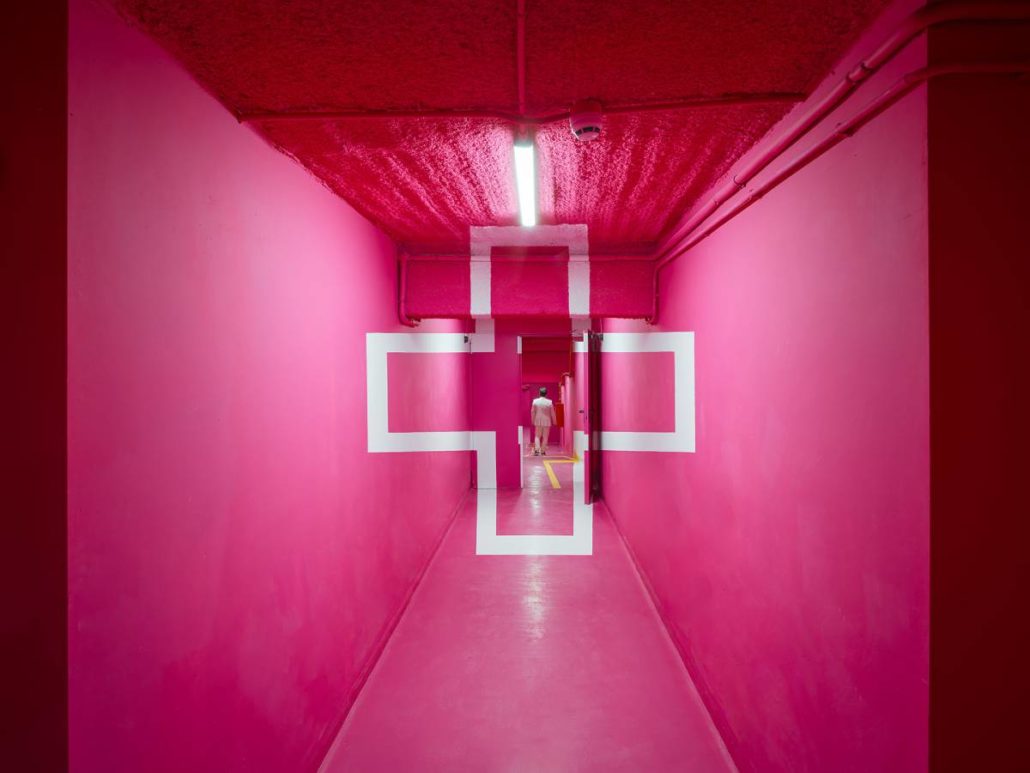
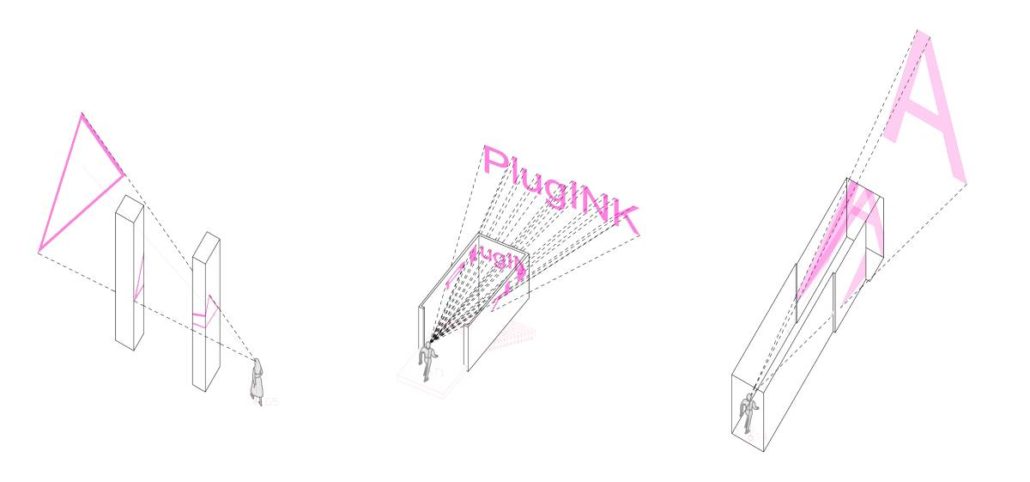
When everything is pink, another colour is needed to render the signs that allow one to find one’s way in an underground and entirely artificial environment. A layer of very simple geometric figures, projected as anamorphoses, is added to the car park’s signage. The very flow of traffic through the car park becomes an architectural promenade in which these figures are fleetingly constructed.
The anamorphoses begin with the point and its grid, moving through the triangle, the square, the pentagon and the hexagon, and finally closing with the circle. It is a geometric narrative that could be interpreted by a child or an alien. For everyone, the decomposition of two-dimensional geometry into a three-dimensional experience brings a pleasant surprise. In the entrance areas and on the storage floor, letters are used instead of geometric shapes.
Pink is not a colour in the visible spectrum. If we remove the green from the RGB digital colour channel, we get the purest shade of pink (255,0,255). In the age of greenwashing, we remove the green but allow 100 per cent of vehicles to be electric. Obviously, the most sustainable approach is to reuse and upgrade existing buildings, even if they have stood empty for decades. PlugINK pragmatically bridges the past with a more eco-friendly, inclusive and optimistic present, recognising that private cars will continue to reign supreme in the suburbs for a long time to come.

